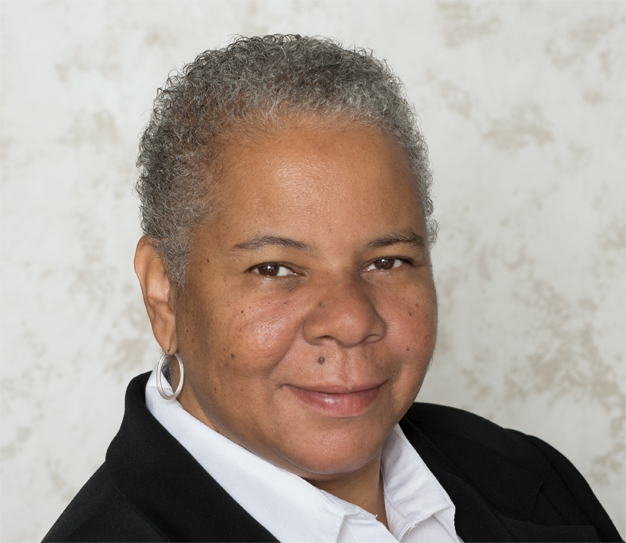
By Dr. Gay Lee
Part 3 of a 3 part series
In Parts 1 and 2, I discussed environmental justice and the impact artificial intelligence may have on workers.
But, in my opinion, there is an even larger question:
What are we doing to prepare our children? The response to artificial intelligence cannot begin when a 45-year-old worker loses a job.
It has to begin in our schools.
Across Orange, Dutchess, and Putnam counties, thousands of children live in economically disadvantaged households. Nearly half of students in Orange County and more than four in ten students in Dutchess County are classified as economically disadvantaged. Even in
Putnam County, where incomes are generally higher, nearly one-third of students fall into this category.
Those county averages do not tell the entire story. Within the Hudson Valley, communities with significant wealth exist only a short distance from communities where families struggle with housing, food, transportation, childcare, healthcare, and other basic expenses.
Those differences can follow children into the classroom.
Now we are asking those same children to prepare for an economy being transformed by artificial intelligence.
Will Every Child Have the Same Opportunity? This concerns me.
AI may create tremendous opportunities in cybersecurity, information technology, engineering, robotics, electrical systems, advanced manufacturing, energy technology, data management, and occupations we may not even have names for yet.
But who will be prepared for those jobs?
If children in wealthier communities have access to advanced technology, computer science, robotics, career exploration, internships, and other opportunities while children in lower-income communities do not, we could create an even larger economic divide.
Today’s educational inequality could become tomorrow’s AI employment inequality.
I do not believe a child’s ZIP code or parents’ income should determine whether that child gets to participate in the economy of the future.
Build an Education and AI Workforce Pipeline
If we are serious about bringing the technology economy to the Hudson Valley, then we should be equally serious about preparing Hudson Valley children to participate in it.
I believe major technology companies receiving substantial public assistance should help establish an Education and AI Workforce Pipeline.
Companies should partner with our public schools, BOCES, Best Resources, community colleges, unions, workforce-development organizations, vocational rehabilitation programs, and community organizations.
We should expand career and technical education, technology laboratories, cybersecurity and information technology education, robotics, electrical training, advanced manufacturing, energy technology, paid internships, summer employment, apprenticeships, and pre-apprenticeship programs.
And these programs should begin before students graduate.
I am especially concerned about economically disadvantaged students and students with disabilities. They should not be an afterthought in the AI economy.
They should be part of it from the beginning.
College Cannot Be the Only Pathway
We also have to change how we think about success after high school.
I strongly support higher education, but a four-year college degree cannot be the only pathway we offer young people.
A student should be able to graduate from high school and have several good choices. Go to college. Attend community college. Earn an industry credential. Enter an apprenticeship. Learn a skilled trade. Or move directly into a career with the skills employers actually need.
We need multiple pathways into the middle class.
Invest in the Children Who Already Live Here
I also believe a portion of any Host Community Benefit Fund created through major data-center development should be dedicated to education and youth workforce development.
That could fund paid high-school internships, summer employment, technology programs, career exploration, apprenticeships, equipment, and other opportunities, particularly for young people from economically disadvantaged communities.
Imagine a student from Newburgh, Beacon, Poughkeepsie, or another Hudson Valley community entering a paid internship in high school, moving into a BOCES or community-college credential program, completing an apprenticeship, and entering a good-paying career without accumulating enormous college debt.
That is the kind of economic development I want to see.
A billion-dollar data center should not sit in or near a community where children can see the building but cannot see a pathway to the opportunities it represents.
That would be a failure of public policy.
Progress Should Have a Public Purpose
Artificial intelligence is coming. In many ways, it is already here.
The question is not whether we can stop technological change. The question is whether we will prepare our people for it.
If taxpayers help companies build the infrastructure of the AI economy, then those companies should help us invest in the children who will inherit that economy.
In my opinion, that is not anti-business.
That is responsible economic development.
I welcome technology companies to invest in the Hudson Valley. But I want our children prepared to become their electricians, engineers, cybersecurity professionals, technicians, managers, entrepreneurs, and perhaps the people who create the next generation of technology.
If we are going to build the infrastructure of the AI economy in the Hudson Valley, we must also build a pathway into that economy for the children who already live here.
Progress should have a public purpose. And that purpose should include making sure the next generation has a genuine opportunity to share in the prosperity that technology creates.